


Travel guide
Dirty or Uncomfortable Taxi? Check and Report the Problem
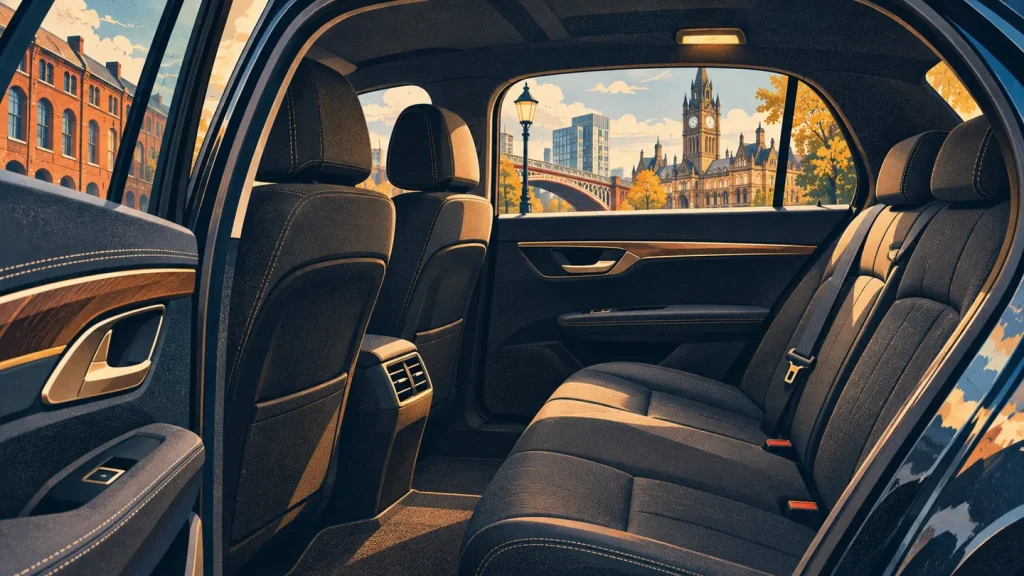
If a taxi arrives dirty or uncomfortable, explain the specific problem before departure. A spill on your seat, an unsuitable amount of luggage space and a damaged seat belt need different responses. The aim is to establish whether the issue can be resolved or a different arrangement is needed.
Look at the space you will actually use
- Is the assigned seat dry and usable, without loose rubbish or items blocking it?
- Can the declared luggage be carried without obstructing passengers or the use of a seat belt?
- Does the belt at your seat fasten and appear undamaged?
- Is there a particular odour, temperature or seating issue you need to raise?
Describe what you can observe. Dirt on the outside of a car is not proof that it is mechanically unsafe, and a clean-looking cabin is not proof that every system works. Do not try to inspect or repair equipment yourself.
Separate an adjustment from a safety problem
A temperature setting or movable item may be straightforward to address. Ask politely and check whether the change resolves the problem. If the vehicle cannot fit the passengers or luggage declared in the booking, contact the operator before setting off.
Do not start a journey in a seat with an unusable seat belt. Ask the operator to resolve the issue or arrange a suitable alternative. GOV.UK explains when passengers must use seat belts. A flight deadline is not a reason to overlook a defect affecting safe travel.
If a problem develops on the move, raise it without distracting the driver. Request a safe stop if necessary and wait until the vehicle is stationary before getting out. For an immediate threat or unsafe situation, follow the safety-concern guide.
Ask what can be done
For a Luxzline booking, contact 24/7 booking support, with the reference and vehicle details. Explain whether the journey has started and what prevents you from using the vehicle. Ask what can be resolved, whether a replacement is available and what that means for the booking and payment. Do not assume a replacement or refund has been approved until it is confirmed.
If you have a requirement relating to allergies, seating or access, discuss it before booking. An ordinary description of a clean vehicle is not a promise of an allergen-free environment or a medical standard.
Keep a useful record
When safe, record the date, time, booking reference and a factual description. A photograph of the specific issue may help, but avoid including other passengers or unrelated personal information. Keep any response and receipts for agreed changes.
Use the complaint-escalation guide if the matter remains unresolved. For wider service or contract advice, GOV.UK lists independent consumer-advice contacts. A separate disagreement about a new charge belongs with the fare-query checklist.
